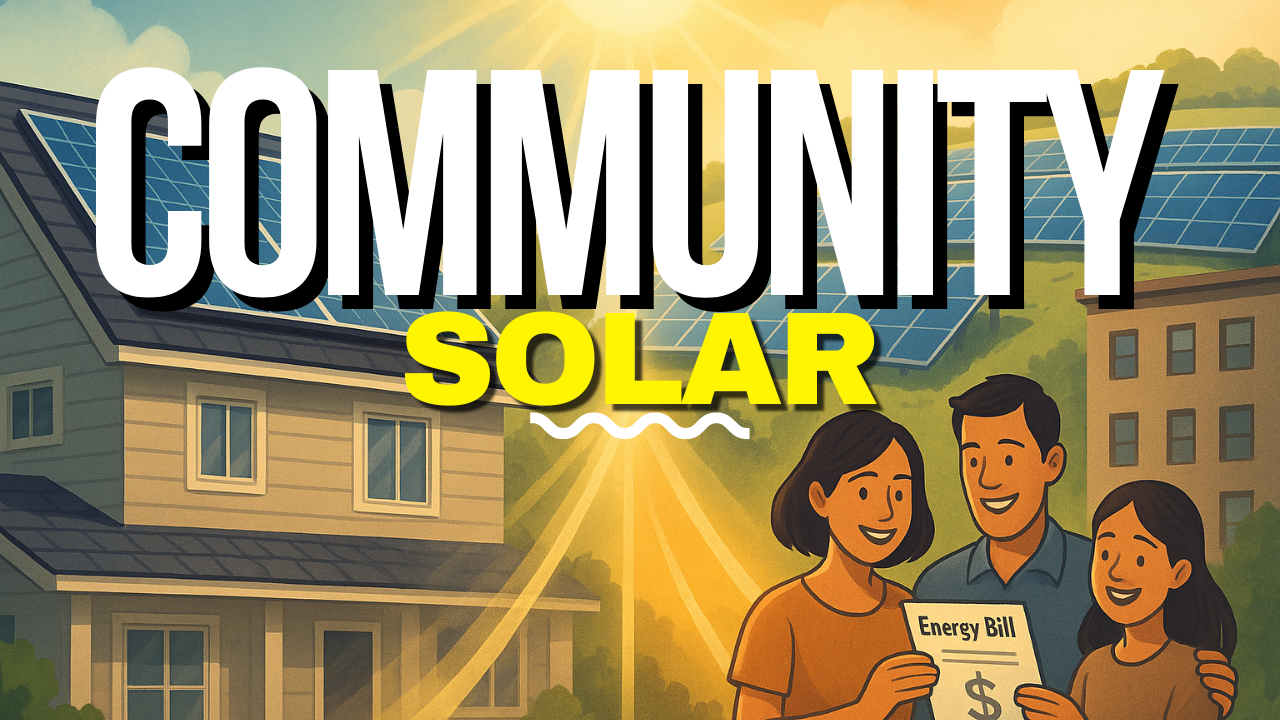
Community Solar Is Booming
8 Tips To help you Tap In Before Everyone Else Does
JOE MOUSAKHEEL
I. The Overlooked Opportunity
Most solar pros focus almost exclusively on rooftop solar. But there’s a massive, hidden opportunity to help more people—without installations, credit checks, or long-term commitments. That opportunity? Community Solar.
I started in rooftop solar back in 2016. It’s been an incredible ride—but over the years, I’ve seen the dark side of the industry: shady financing, misleading lead generators, unethical reps overselling, and customers left confused or disappointed. The truth is, rooftop solar is great for some homeowners—but it leaves too many people behind.
Years ago, I looked into Community Solar. At the time, it wasn’t viable as a business model. Commissions were too low, and residential programs filled up fast, leaving reps in limbo while waiting for the next solar garden to open. It just wasn’t scalable… until now.
That’s why I partnered with Devin Dickinson—an industry leader who’s built one of the largest networks of developers and solar gardens in the U.S. Together, we’re scaling Community Solar like never before. The model has evolved. The programs are stronger. And for both solar pros and consumers, it’s becoming one of the most powerful win-wins in the entire industry.
Bottom line? If you’re selling solar and ignoring Community Solar, you’re leaving serious money on the table.
Let’s break down what makes this so powerful—and how to get started before the rest of the industry catches on.
Advertisement - continue reading below
2. What Is Community Solar, Exactly?
Community Solar is a shared solar program that lets customers subscribe to a local solar farm—without needing panels on their roof. The solar farm feeds electricity into the local grid, and subscribers receive guaranteed savings on their utility bills.
Here’s how it works:
1. Customers subscribe to a nearby solar garden.
2. The solar garden produces power and feeds it into the grid.
3. The utility applies credits to the customer’s bill.
4. The customer pays less—and the solar garden gets paid for the energy produced.
Two Billing Models:
• UCB (Utility Consolidated Billing): The discount appears directly on the customer’s utility bill. Seamless.
• Dual Billing: Customers get two bills—one from the utility, one from the solar provider—but the total cost is still lower than before.
Let’s Compare Community Solar & Rooftop Solar Features
Community Solar
$0 upfront cost – No need for financing or loans
5–20% guaranteed savings – Often more for lower-income customers
No credit check (or minimal) – Accessible to nearly everyone
No installation required – Solar is produced off-site
Month-to-month terms – No long-term commitment
Available to renters – Doesn’t require homeownership
Great for shaded or unsuitable roofs – Works when rooftop solar doesn’t
Rooftop Solar
High upfront cost – Unless financed through loans or leases
Typically higher savings – Especially over the long term
Credit check usually required – May exclude some customers
Requires installation on the home – Roof condition matters
Long-term commitment – Often 20+ years through financing agreements
Ideal for homes with good sun exposure – Maximizes system performance
Advertisement - continue reading below
3. Why Homeowners Say “Yes” to Community Solar
Rooftop solar works for some. But Community Solar opens the door to everyone else—renters, low-income households, and homeowners with bad roofs or low credit scores.
It’s especially game-changing for lower- and moderate-income (LMI) families. Many solar gardens offer their biggest discounts to these groups, ensuring the people who need savings most get access to clean, affordable power.
It’s more than savings—it’s impact. Community Solar replaces expensive, dirty fossil-fuel energy with clean, local solar. It empowers communities and democratizes solar access.
Customers say yes because:
No Roof Needed – Renters, apartments, and shady roofs? No problem.
Guaranteed Savings – No risk. No upfront cost. Just a lower bill.
Environmental Impact – Local clean energy, reduced carbon footprint.
Accessible to All – Works for people who typically get left out.
Advertisement - continue reading below
4. Community vs. Rooftop: When to Offer Each
Knowing when to lead with Community Solar is key to closing more deals.
When Community Solar Wins:
• Renters or homes with poor roofs
• Customers who can’t (or don’t want to) finance a system
• LMI households who qualify for bigger discounts
• Commercial clients without rooftop space
• Markets with poor net metering policies
When Rooftop Solar Makes More Sense:
• Homeowners who want full ownership and maximum ROI
• Those seeking energy independence (especially with batteries)
• States with strong net metering and solar incentives
How to Frame the Pitch:
Instead of pitting them against each other, make Community Solar a tool in your toolbox.
Ask:
“Ever seen those big solar farms off the highway? What if you could tap into that—without installing a single panel?”
“Want a guaranteed way to save money on your bill—with zero commitment?”
It’s a faster yes. It’s a powerful fallback. And often, it’s the smarter choice.
5. The Volume Game: How Community Solar Pays Big
It’s true—Community Solar doesn’t pay as much per deal as rooftop. But it’s a volume game. Quick sign-ups, faster closes, and easier sales mean more money faster.
How Reps Get Paid:
Residential: Paid per kilowatt-hour of usage (usually $0.01–$0.10 per kWh annually).
Commercial: Lower rate per kWh—but far more usage = bigger checks.
Commission Structure Tips:
Gardens with higher discounts for customers often pay lower commissions (easier to sell).
Gardens with lower discounts may pay higher commissions (require more finesse).
Some offer residual income if customers stick with your company long-term.
Real Examples:
Bob closed 22 of 24 residential deals in one week, earning $6,600.
Isaiah landed a single commercial client using 600,000 kWh and pulled a $9,000 commission.
6. When NOT to Sell Community Solar
Yes, it’s exciting. But here’s when to hold back:
🚫 If the customer qualifies for rooftop solar and wants maximum long-term savings
🚫 If local programs don’t offer real discounts
🚫 If the customer confuses it with an energy supplier switch
Bottom line: Don’t force it. Educate customers on both options. Long-term trust always beats short-term commission.
7. How to Launch Fast
Want to start strong?
Partner with the right providers – Look for experienced operators with stable commissions and excellent support.
Join Blitz Campaigns – We run virtual blitzes targeting high-usage customers and top solar farms nationwide.
Add it to your existing pitch – Door knocking? Virtual selling? Just stack Community Solar as a quick “bonus” offer.
Use Smart Tools – Use platforms like AnnualUsage.com to pull utility bills quickly and CRMs to stay organized.
Visit LocalSolarGarden.com to learn more.
8. Final Word: Don’t Sleep on This
Community Solar is exploding—and early adopters win big. The reps who add it to their offer stack aren’t just making more money… they’re reaching more people and building serious momentum.
Want to future-proof your solar career?
Start here: SellCommunitySolar.com
About The Author

Joe Mousakheel
Joe Mousakheel (AKA: Joe Moose) is a pioneering force in residential solar, best known as one of the co-founders of SolarCon, the nation's leading solar conference, and creator of the Solar Community Forum—a thriving Facebook community of nearly 30,000 industry professionals. Since 2017, his influence as solar thought leader has shaped the solar landscape, offering actionable insights on sales strategy and market expansion. Through SolarCon, he's helped established the premier gathering space for industry leaders, while his digital platforms continue to educate and connect solar professionals nationwide. Joe's commitment to community building and education has made him an indispensable voice in residential solar energy.

💌 Did a friend share this with you?
That’s because they think you’ll love it. Get started with your own subscription for just $5 and never miss another issue!